Breaking Down Barriers

Supporting Community Engagement and Effective Science Communication

We have discontinued the Breaking Down Barriers program but will continue to make available its web resources. If you have questions, please email us.

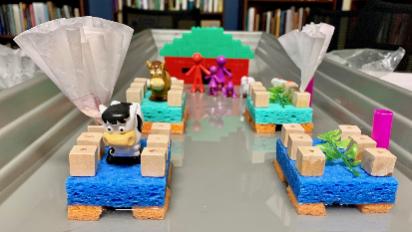
Over the years, NCSE has developed and field-tested many climate change and evolution activities, from The Evolution of the Flu to Rising Tides. They’ve been used effectively across the country, engaging thousands of participants to help them overcome misconceptions and misinformation they may have about evolution and climate change. Detailed descriptions of each activity are available online, including how-to videos and resource lists. (Note: You are responsible for purchasing any necessary materials beyond what is downloadable. We strive to make the materials as affordable and accessible as possible.)

Article
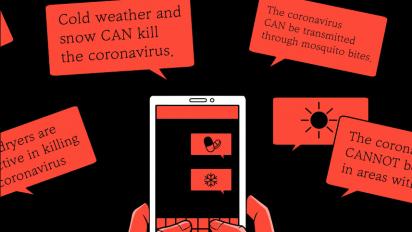
Check out our entire series explaining the science involved in the coronavirus pandemic.
Article
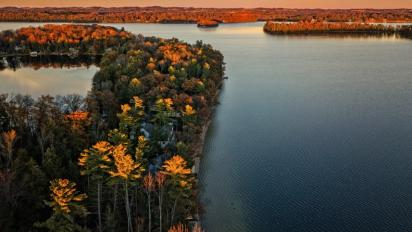
Early morning on Father’s Day, June 17, 2018, I was in Houghton, Michigan, for my summer forestry field research.
Activity Kit
Activity Kit
Article
For the final 2020 collaboration between the NCSE Graduate Student Outreach Fellows and Our Changing Climate, we turned to portrayals of climate change in television sitco
Article
As cities move beyond recycling paper and metals, and into glass, food scraps and assorted plastics, the costs rise sharply while the environmental benefits decline and sometimes vanish.
Activity Kit
Our 2020 topic: $100k Budget Distribution Challenge. Your town has budgeted $100,000 to fund a climate-friendly initiative, and players must role play and argue for the proposal that their stakeholder wants to see passed.
Article
To read academic writing is almost certainly to suffer. Yes, the ideas are likely complex. But the way many scientists choose to write about their work makes it even more difficult to understand.
Article
Summer looks different this year. A number of families will follow health guidelines and choose not to go on vacation or even to a public pool.
Activity Kit
Climate Change in Iowa, developed by NCSE Graduate Student Outreach Fellow Joe Jalinsky, encourages communities in Iowa to learn about the processes and consequences of climate change.
Activity Kit
Darwinism is a theory of biological evolution developed by the English naturalist Charles Darwin. It states that all species of organisms arise and develop through the natural selection of small, inherited variations that increase the individual's ability to compete, survive, and reproduce.
Activity Kit
The strongest effect of climate change on plants is not going to be the change in the overall amount of precipitation they receive, but rather the increased variation in precipitation from year to year.
Activity Kit
Take a closer look at global warming, keystone species, and the nutrient cycle in this interactive activity by NCSE Graduate Student Fellow Laurie Luckritz.
Activity Kit
Our 2019 topic—dam renovation—divides players into characters representing six stakeholder groups. The groups review data, discuss priorities, and make the best possible decision about what to do with the town’s century-old dam.
Activity Kit
Pollinators on the Move is a two-part experience in which participants explore flower pollination through the eyes and actions of animal pollinators.
Activity Kit
What are some of the best ways to clean contaminated rivers and streams? From Dirty to Clean helps participants discover different passive remediation options, such as the use of limestone, plants, and bacteria.
Activity Kit
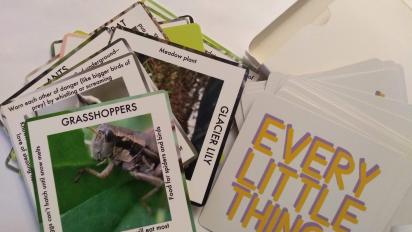
Every Little Thing is a card game about species interactions. It contains 36 sturdy, full color cards that are easy to take with you anywhere and can be used in multiple ways with any number of participants.
Article
Due to the spread of coronavirus, millions of parents and guardians are finding themselves having to take on the role of parent and teacher this spring.
Article
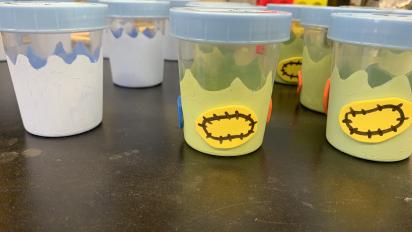
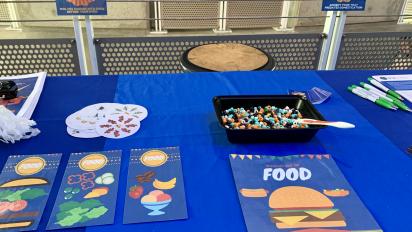
This activity demonstrates how agriculture affects water systems in the form of runoff.
Activity Kit
In this activity, participants will learn about the evolution of dog domestication, as well as crop domestication, in this hands-on, carnival-themed game. Watch wolves change into dogs before your very eyes! Taste ancient food that predates domestication! Explore our archaeological test pit!
Activity Kit
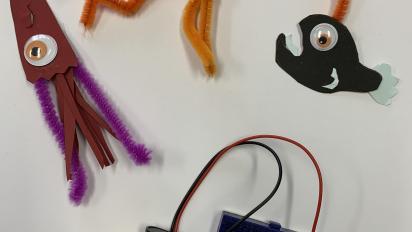
In this fun and illuminating activity, participants learn that the ocean presents a strong selective environment for bioluminescence — a trait that has evolved in the oceans over 40 t
Article
Due to the spread of coronavirus, millions of parents and guardians are finding themselves having to take on the role of parent and teacher this spring.
Activity Kit
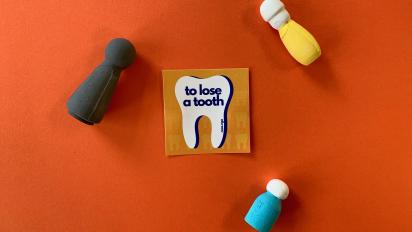
Designed primarily for learners ages eight and older, To Lose A Tooth presents an evolutionary puzzle focused on human teeth. Participants will explore how natural selection, sexual selection, gene flow, and isolation result in genetic diversity.
Article
It took less than five minutes to destroy my YouTube recommendations.
Activity Kit
Climate change affects ecosystems in multiple ways.
Activity Kit
Dinosaurs, pterosaurs, birds, oh my! Explore the evolution of flight with a phylogenetic tree of prehistoric and living creatures. Use character-trait observations and DNA sequences as evidence to re-create the tree and solve the mystery.
Activity Kit
In Case of Cellulose dives into the digestive tracts of four species - human, panda, horse and cow; and explores how cellulose is digested differently.
Activity Kit
Misconceptions about evolution are addressed in Geology Park as participants must travel a scaled model of deep time. In addition to exploring the radiations of important phylogenetic groups, participants can also collect data useful in reconstructing the past.
Article
Mammals exhibit remarkable variety in their sense of hearing; from elephants communicating with infrasonic sounds to bats navigating their environment through echolocation calls at ultrasonic frequencies, many non-human mammals hear outside the typical human hearing range.
Activity Kit
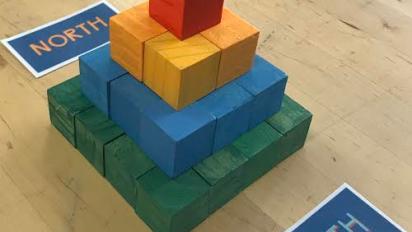
This project uses Climatograms to determine change in precipitation over the last 100 years, using Pittsburgh, PA as a reference point. Participants pick a time point and build the precipitation for that year using counting cubes.
Activity Kit
The activity, Climate Change on File: Trees as Environmental Secretaries, by NCSE Graduate Student Outreach Fellow Taryn Dunivant describes many environmental conditions that trees rely on and face and how they become recorded in their wood.
Activity Kit
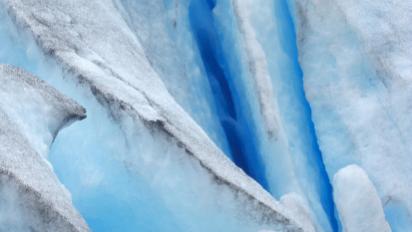
Choose from three modular activities, developed by NCSE Graduate Student Outreach Fellow Meera Sethi, to achieve linked learning goals. In the first, historic vs. contemporary photos of the same glaciers dramatically illustrate the retreat of mountain ice.
Activity Kit
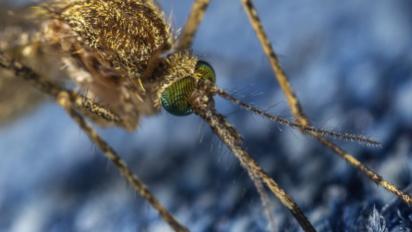
Engage in a climate-health discussion focused on the spread of West Nile virus, transmitted by mosquitoes which flourish during the warmer, wetter conditions brought about by climate change.
Activity Kit
As the climate continues to change, we see changes to the hydrologic cycle occurring worldwide.
Activity Kit
Mosquito populations are predicted to extend their ranges to new areas as a result of climate change. This brings about concerns for the spread of mosquito-borne diseases such as malaria, dengue, Zika, and West Nile.
Activity Kit
Many cities act as urban heat islands, significantly warmer than their surrounding areas due to human activities. Our warming climate will only make these cities hotter, leading to intense heat waves and lowered quality of life.
Activity Kit
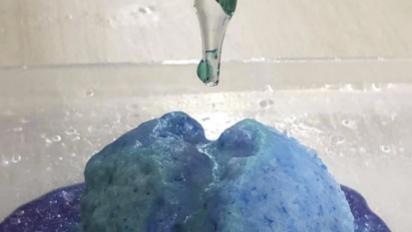
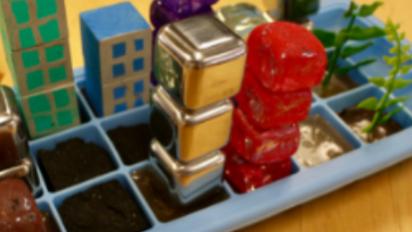
Warming oceans and melting landlocked ice caused by global climate change may result in rising sea levels. This rise in sea level combined with increased intensity and frequency of storms will produce storm surges that flood subways, highways and homes.

Become a DIYSci Affiliate

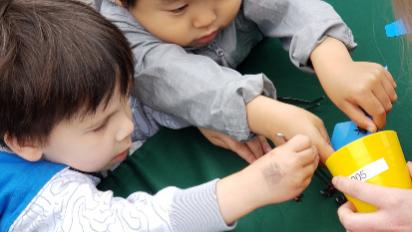
DIYSci Affiliates (formerly Science Booster Clubs) lead science activities in communities that may not have strong connections to science learning opportunities. Run by local volunteers, DIYSci Affiliates hold activities in publicly accessible places, such as libraries, farmers’ markets, and community centers. DIYSci Affiliates can make use of fully stocked activity kits sent quarterly by NCSE, as well as any of the materials available for download on this page. Love science and communicating science with kids? Then consider organizing a DIYSci Affiliate.

Learn More